2025 Comprehensive Guide to Recruiting Remote Chinese Talent: Everything You Need to Know
As the global workforce becomes increasingly distributed, forward-thinking companies are turning their eyes toward East Asia. Recruiting remote Chinese talent is no longer just a cost-saving measure; it is a strategic move to access some of the world’s most disciplined and technically proficient professionals. In this guide, we explore the landscape of the Chinese remote job market in 2025 and how you can successfully navigate it.
Why Global Companies are Hiring Chinese Professionals in 2025

The demand for hiring Chinese professionals has surged due to several key factors:
Unmatched Technical Depth: China produces over 4 million STEM graduates annually, creating a massive pool of senior developers, AI researchers, and data scientists.
Bilingual Proficiency: The new generation of Chinese professionals often has international education backgrounds and is highly proficient in English.
Efficiency and Work Ethic: Known for high productivity and a problem-solving mindset, Chinese talent can significantly accelerate product development cycles.
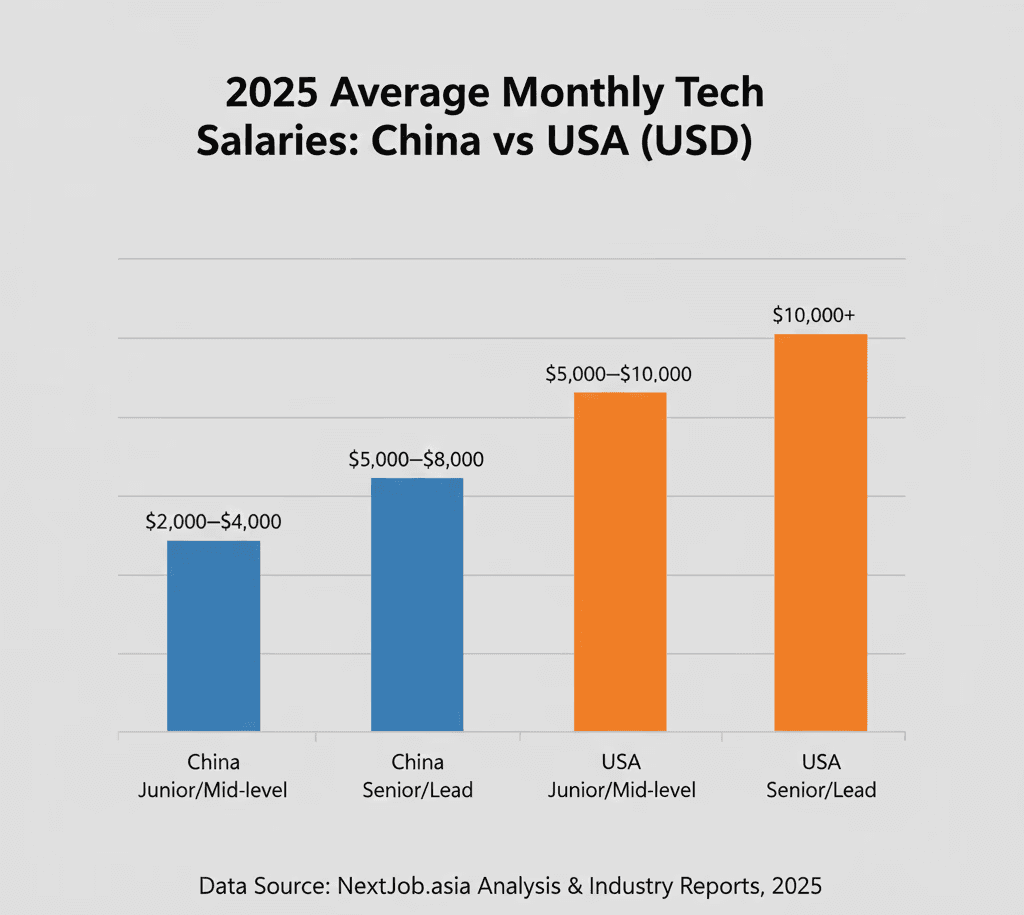
The Cost of Recruiting Remote Chinese Talent
While salaries vary by experience, hiring in China typically offers a 30% to 50% cost advantage compared to hiring in the US or Western Europe for the same level of expertise.
Junior/Mid-level: $2,000 – $4,000 USD / month
Senior/Specialized: $5,000 – $8,000+ USD / month
Navigating Compliance and Payroll
One of the biggest hurdles in hiring Chinese professionals is the legal framework. To stay 100% compliant, companies usually choose one of two paths:
Independent Contractor Agreements: Best for short-term projects or specific deliverables.
Employer of Record (EOR): The safest way to hire full-time staff without a local Chinese entity. This handles social security (Five Insurances), housing funds, and local taxes.
At NextJob.asia, we specialize in managing these complexities so you can focus on growing your business.
FAQ: Hiring Remote Talent in China
Q: Is it legal to hire a remote worker in China without a local office?
A: Yes, it is legal through Contractor Agreements or by using a local EOR partner like NextJob to handle payroll and compliance.
Q: How do I handle the time zone difference?
A: Most Chinese remote professionals are accustomed to a "hybrid overlap" (e.g., 2-4 hours of synchronized time) with Western teams to ensure smooth communication.
Q: Where can I find the best Chinese professionals?
A: While platforms like LinkedIn are used, the most effective way is through specialized agencies like NextJob.asia, which have deep roots in the local ecosystem.
Data source in this report reference: Robert Half 2025 Salary Guide; Hays Asia Salary Guide 2025